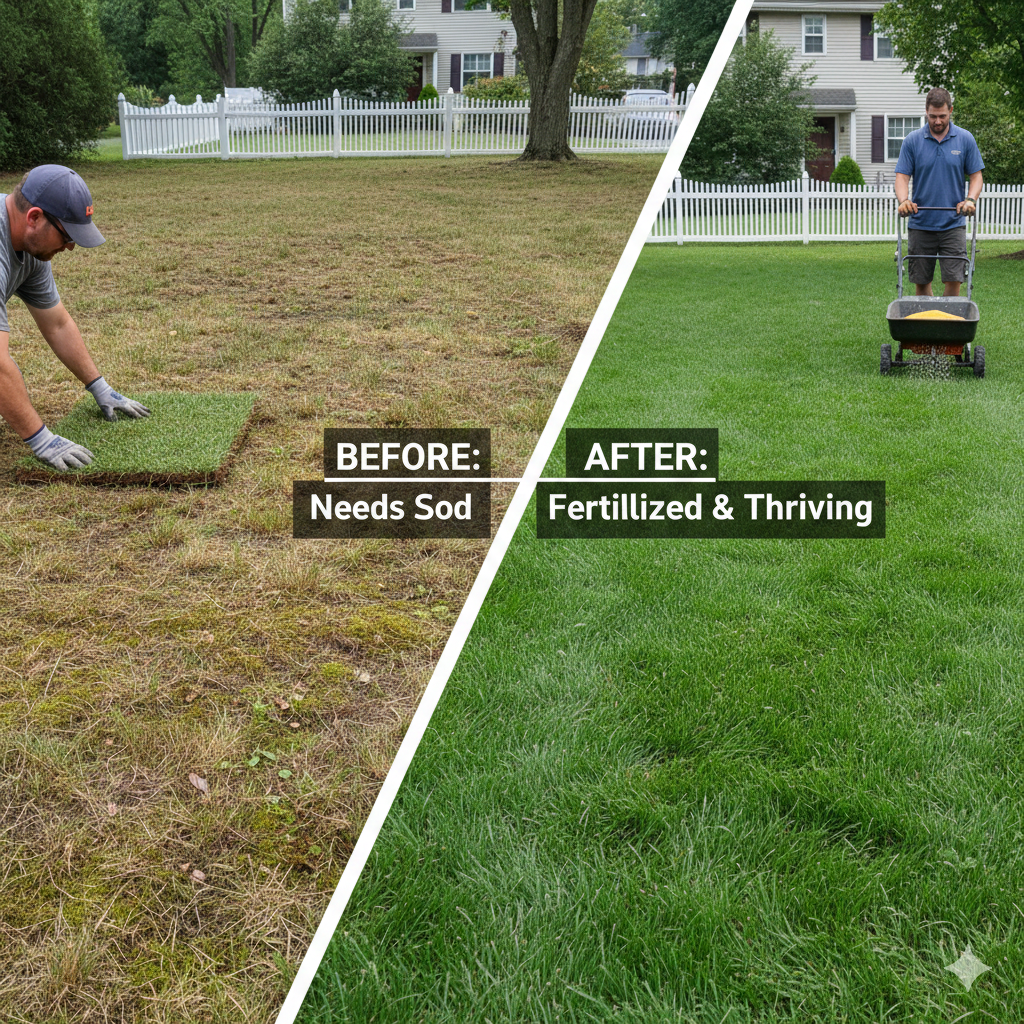
A healthy, green lawn doesn’t always require starting from scratch—but sometimes it does. Homeowners often ask whether their struggling grass can be revived with a professional fertilization plan or if it’s time for a complete sod installation. Knowing the difference can save you time, money, and frustration while getting your yard back to peak condition faster.
Below, we break down the clear signs your lawn needs a fresh start with new sod versus when a targeted lawn fertilization and care program is all it takes.
Signs Your Lawn May Only Need Better Fertilization
In many cases, lawns look unhealthy simply because they lack proper nutrients or consistent care. If your grass shows these signs, a custom fertilization plan may be the solution:
1. Grass Is Thin but Still Alive
If your lawn looks sparse but you still see green growth, the roots are likely intact. This often points to:
- Nitrogen or iron deficiencies
- Improper fertilization timing
- Soil pH imbalance
A soil-based fertilization program can restore thickness and color without replacing the turf.
2. Yellowing or Uneven Color
Patchy yellow or pale green grass is commonly caused by:
- Poor nutrient absorption
- Compacted soil
- Inconsistent watering
Professional lawn care services can correct this with slow-release fertilizers, aeration, and proper watering schedules.
3. Weeds but No Bare Dirt
If weeds are present but grass still exists underneath, fertilization combined with weed control treatments can help your lawn outcompete invasive growth.
When Your Lawn Needs a Complete Fresh Start With New Sod
Sometimes fertilization alone won’t fix the problem. These are the situations where new sod installation is the smarter investment.
1. Large Bare or Dead Areas
If your lawn has widespread brown patches, exposed soil, or completely dead grass, the root system has likely failed. Fertilizer won’t revive dead turf—new sod is the fastest and most reliable fix.
2. Severe Soil Compaction or Drainage Problems
Lawns that remain soggy, develop standing water, or harden like concrete often suffer from poor soil structure. In these cases:
- Old grass struggles to establish roots
- Nutrients can’t penetrate properly
Sod installation paired with soil preparation and grading creates a healthier foundation from the ground up.
3. Ongoing Lawn Issues Despite Regular Care
If you’ve invested in fertilization, weed control, and irrigation but see little improvement, it may be time to reset. New sod provides:
- Instant curb appeal
- Uniform grass coverage
- Strong, healthy root systems
Sod vs. Fertilization: Cost vs. Long-Term Value
While fertilization is more affordable upfront, sod offers immediate results. The best option depends on:
- The current condition of your lawn
- Long-term maintenance goals
- Property value and curb appeal priorities
At More Green Landscaping, we help homeowners choose the most cost-effective and sustainable solution—not just the fastest fix.